


Why Isn't My Website Showing Up on Google? Three Different Problems
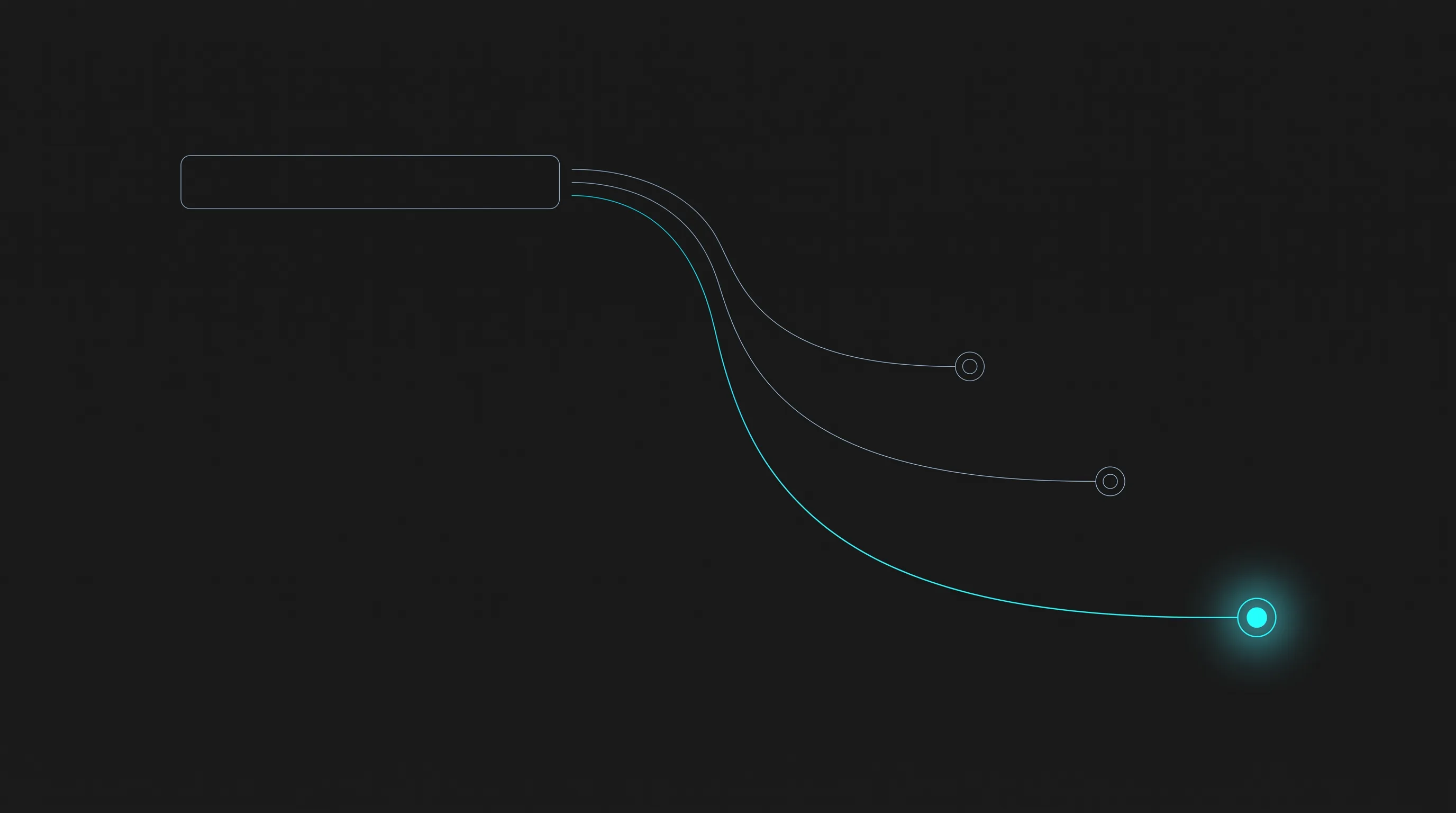
Three problems that look identical from your desk
Your website is not showing up on Google. That one sentence covers three separate failures, and they share almost nothing beyond how they feel from where you are sitting.
Either Google does not hold your page at all, or it holds the page and ranks it too low to find, or it ranks the page well and you still get nothing. Three causes, three different jobs. Most guides on this question treat them as one problem and hand you the same nine-step checklist, which is why owners work through all nine and finish exactly where they started.
Work out which one you have before you change a thing.
Check properly before you diagnose
Most advice tells you to search site:yourdomain.co.uk and count the results. That operator gives an approximation, not an inventory. Google's own help page for missing pages sends you to the URL Inspection tool in Search Console instead, and that is the one to trust, because it reports what Google holds for one specific address rather than a rough sample of the site.
Your own testing also misleads you. Search from your premises, logged into your Google account, on the laptop that has opened your site four hundred times, and Google adapts what it shows you. Your site can look higher than a stranger in the next town would ever see it. Use a private window, and where you can, check again from a device that has never visited the site.
Problem one: Google does not hold your page
Open the Page Indexing report in Search Console and read the status. Two of them cover most cases, and owners misread both.
"Discovered - currently not indexed" means Google found the address and has not fetched it yet. In Google's description, the page "was found by Google, but not crawled yet", and often Google rescheduled the crawl because fetching it at that moment would have overloaded the site.
"Crawled - currently not indexed" does the most damage, because it reads like a punishment and is not one. Google's wording: the page "was crawled by Google but not indexed. It may or may not be indexed in the future; no need to resubmit this URL for crawling."
That last clause is Google telling you the resubmit button is not the fix. Owners press it weekly for months. Nothing moves, because nothing is broken in the way they assume. Google is direct about the wider point as well: "Indexing isn't guaranteed; not every page that Google processes will be indexed." A page can be well built, crawlable, and still not selected.
Real blockers do exist, and they are worth ruling out first because each one stops indexing dead. A noindex tag left behind after a redesign. A robots.txt line blocking Googlebot. A canonical tag pointing at a different address, which tells Google to index that page instead of this one. In WordPress, the "Discourage search engines from indexing this site" checkbox does the lot in a single tick. All four take minutes to check.
Problem two: indexed, and ranked too low to see
If Search Console shows the page indexed, ranking is the job, and it is a different job. Google separates these stages itself. Crawling finds the page, indexing stores it, and serving decides what to show for a given search. A page clears the first two and still loses the third.
Position decides almost everything here. Backlinko's analysis of millions of search results found the top organic result takes 27.6 percent of all clicks, with the share dropping away sharply below it. By page two you are competing for the fraction of people who did not find what they wanted in the first ten results, which is most of the way to nobody. The work that lifts a page is the ordinary work, and I have set it out at length in the guide to local SEO for UK service businesses.
Problem three: ranking well, and still invisible
This is the failure almost nobody writes about, and it catches the businesses that did the work properly.
You check your position. Page one, maybe top five. The enquiries still do not come. No checklist helps here, because your page is not the problem. Somebody takes the click before it reaches you.
Four things take it. The first is that the results page has changed shape. SparkToro and Similarweb, using desktop and mobile panel data, found that 68.01 percent of Google searches ended without a click in the first four months of 2026. That study measured US searches, so read it as direction rather than a UK figure, the same way you would read any panel study from another market. When an AI Overview appeared, the same research put the no-click share at 83 percent. Your page can sit second and lose to an answer printed above it.
The second is that ads and the local map pack push you down the screen. Position three sounds strong until you run the same search on a phone and find ads, a map pack and a row of questions stacked above you. You hold the position. Nobody scrolls far enough to use it.
The third is that Google rewrites your title. You search, you scan for the words you wrote, you do not find them, and you conclude you are missing. Google documents this behaviour: where it detects an issue with a title, it "may try to generate an improved title link from anchors, on-page text, or other sources". Your listing was sitting there. You walked past it because it did not look like yours.
The fourth is that you rank for words nobody types. Position one on a phrase with no demand returns nothing, and Search Console tells you which problem you have. A strong average position with almost no impressions means the term is not searched. Plenty of impressions and no clicks means people see you and choose someone else, which makes it a title and description problem rather than a ranking one.
The part most guides bury at number six
If your domain is young, none of the above may be your problem.
Google states it plainly in its crawling and indexing FAQ: "the most common reason that a site is not indexed is because it's just too new; be patient." The same FAQ names a second cause that no on-page edit touches, that a website "might not be well connected through multiple links from other sites on the web".
Most articles on this query list "build backlinks" as step six of nine, sitting between internal linking and search intent as though it were another afternoon's work. It is a different kind of task and a slower one. Nobody links to a business the web has not heard of yet, and no amount of meta description tuning stands in for that.
I can be specific here, because it happened on this site. As of 6 July 2026, nine URLs on this domain sat in "crawled, currently not indexed". On 13 July I checked every one of them against a fresh build. Each rendered between 1,000 and 2,600 words into its HTML, carried a self-referencing canonical, exactly one H1, valid structured data and a sitemap entry. Nothing was technically wrong with any of them. The domain was around four and a half months old at that point and had no link profile worth the name. That was the position on those dates, and I am not going to dress it up as anything else.
Where to start
Take the three in order. Confirm what Google holds using URL Inspection rather than a site: search. If the page is missing, rule out noindex, robots.txt and a stray canonical before you accept that Google has not chosen it yet. If the page is indexed and buried, the work is the page itself and the links pointing at it. If it ranks and still returns nothing, look at what sits above you on the results page and at what your listing says once somebody reaches it.
Then be honest about the age of the domain, because patience is a real answer even though nobody wants to hear it. If you would rather have the diagnosis and the work handled month to month, that is what our UK SEO services cover. If the site underneath is the weak part, and often it is, start with professional web design across the UK.
Syed
Founder, Syed Websites
Syed is the founder of Syed Websites, a UK web design studio. He came up through digital marketing agencies, mostly on the sales side, where he saw the same problem again and again: small businesses needed good websites, but agency prices put them out of reach. So he went out on his own to build sites people could actually afford, on a build-first model where the client only pays once they have seen the finished site and approved it. Alongside Syed Websites he works freelance with clients on SEO, email marketing and social media marketing, so he writes here from hands-on experience across web design and digital marketing, not theory.


See your new website before you pay for it.
We build it, you review it on a private link, and you decide. £0 upfront, no contract.